English notoriously lacks smell-specific words. “Red” is a precise and measurable attribute that belongs purely to light and vision; olfactory language has no equivalent. To the standard three smell words –stinky, fragrant, and musty, I’d add aromatic, redolent, odorous, foetid, mephitic, whiffy, and reeking– but mostly we pilfer the lexicon of other senses.
We talk about properties of texture for something intangible, of light for the invisible, of flavour for the inedible. Slippery, clammy, sticky, soft, velvety, scratchy, jagged, prickly. Translucent, opaque, radiant, shimmering, gleaming, dazzling, glowing. Piquant, pungent, spicy, bitter, sweet, salty, sour. On and on.
Landmarks, Robert Macfarlane’s hymn to the “astonishing lexis for landscape”, shows how knowledge and love are bound together in language. It has resonant glossaries of moorland, mountain, and water words. Zwer is the sound of a covey of partridges taking flight, af’rug the reflex of a wave after it has struck the shore, and ammil the fine film of silver ice that coats leaves when freeze follows thaw. They are tools for farmers, fishers, scientists, and walkers, riches for poets.
Why can’t we have such glorious exactitude to communicate our experience of scent?
We can switch to the technical or the poetic. But fewer can conjure the behaviour of a perfume from a recipe of molecules than hear an orchestra from reading a score.
The right turn of phrase that maps one smell to another, though, can unlock understanding, even a mental recreation of a scent not yet smelled. Eating russet apples in a library, mashing bananas in a plastic bowl, dust on an incandescent lightbulb, fireworks on a cold misty night. But they still refer back to a source of reference odours not inherent qualities. There is only comparison and analogy, and the risk of drowning in cliche.
The things societies care about have more words –words that let us understand, measure, study, explain, imagine, and remember.
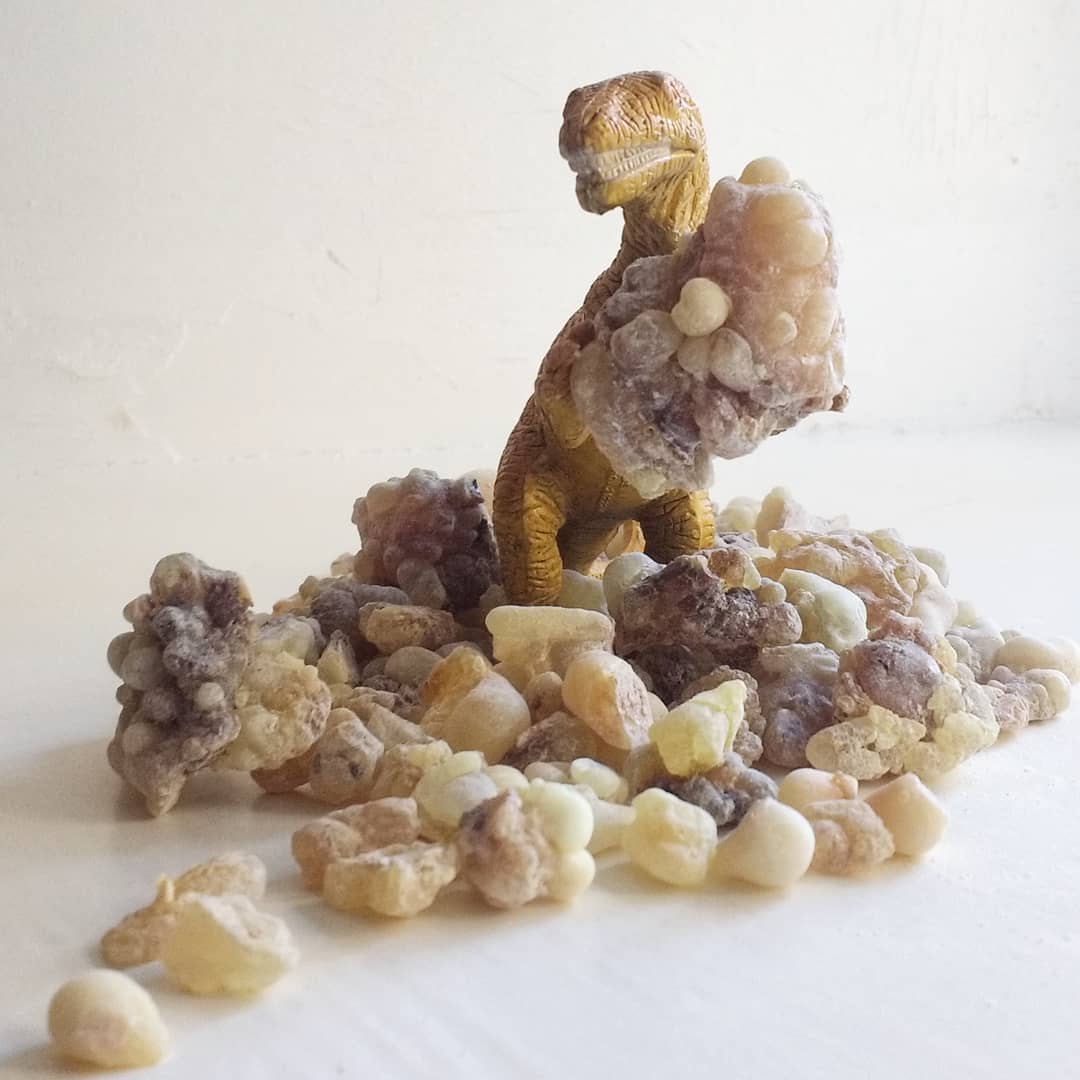
You know what frankincense smells like. You don’t need my words here. But how can we describe that smell better?
originally posted 16 May 2019