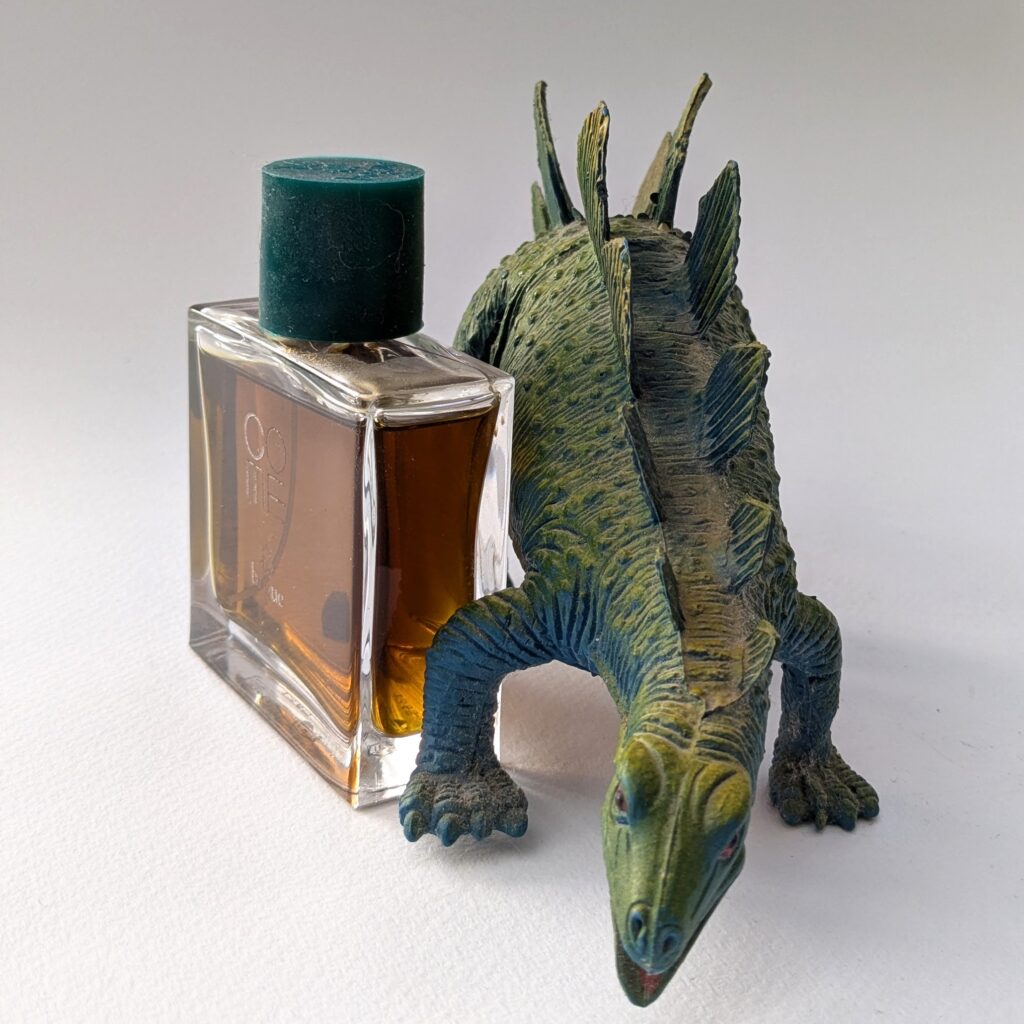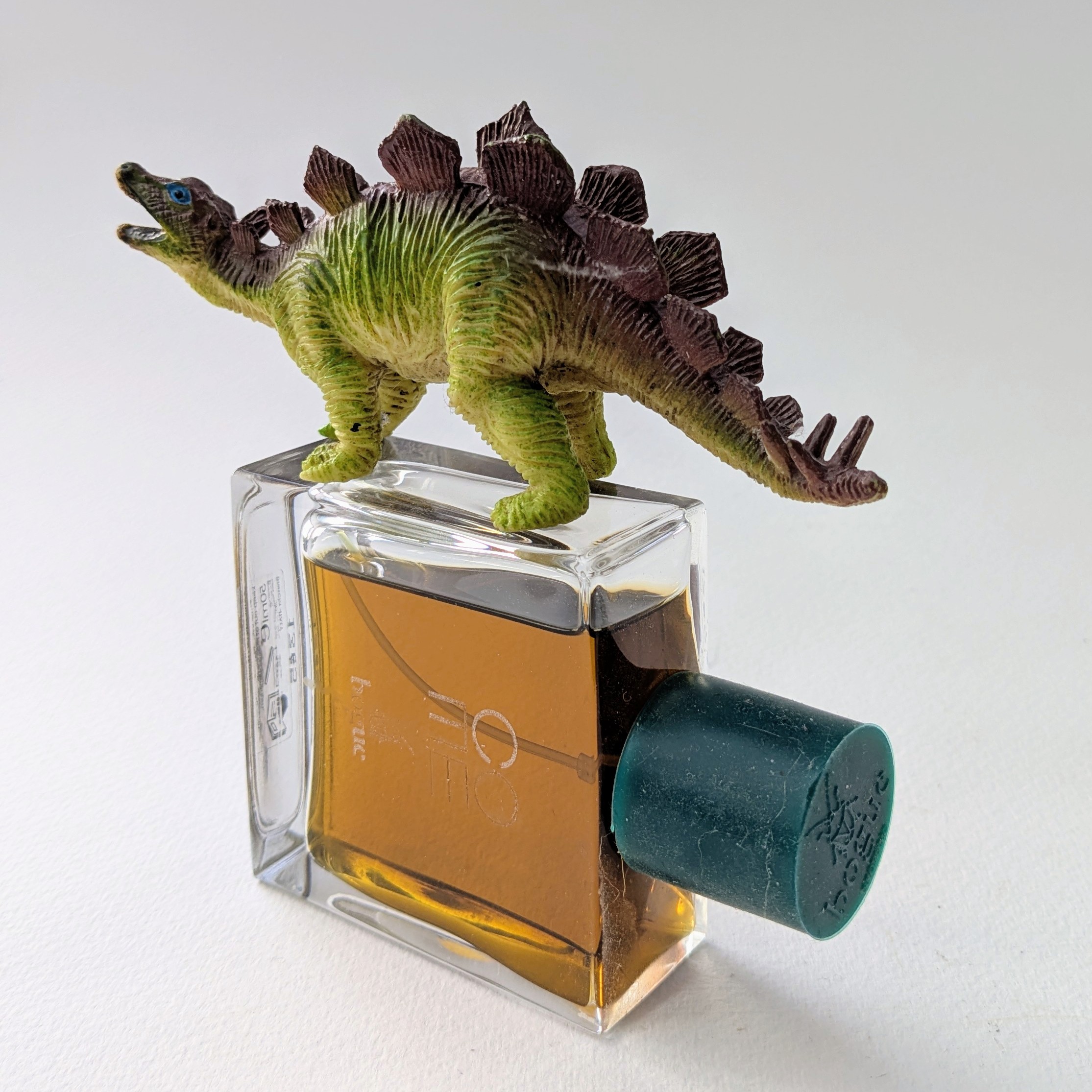
I’ve spent much of the last couple of months wearing Antonio Gardoni’s Come, the most recent release in his permanent Bogue Profumo range. And I’ve spent the last three days trying and failing to write about it.
I started with forests — travelling from the lush oxygen-rich late cretaceous greens of T-Rex* to the cold-drizzled pockets of hidden rainforest we have left in Britain — and moved to the tangles of scrub and underbrush reclaiming space, and continued on to well-tended orchards, and a single fig trained against a south-facing wall.
I kept thinking about the changing scales of plants and how we look at them: through lenses into the intricate universes of mosses and lichens, nose level into the tangled and broken stems of Dürer’s Great Piece of Turf**, dreaming into the narcotic flower fields of Oz, and overwhelmed by the incomprensible scale and density of cloud forests.
None of them sat right with the multi-faceted experiences of living inside this scent. I’ve deleted my words again, and again, and again.
It is no secret that I am a fan of Antonio Gardoni’s work. I love the shape shifting, light shifting, texture shifting nature of his perfumes, as well as the heady combination of classical complexity and an individual creative voice. Perhaps each one always smells the same, but the brain pulls focus differently with each viewing. (I doubt it.)
I love the way that Gardoni’s scents make me reach for a wide array of references from art and landscape and film and memory when I’m trying to tether them to my world. Sometimes it’s obvious. Clearly this time it’s not. But just as poetry doesn’t translate neatly from one language to another, perfume doesn’t always fit precisely within words.
Then I realised that on the days I’ve worn or thought about Come I’ve been falling asleep with the same image in my mind: the wood between the worlds.
(I’ve not checked the original text of The Magician’s Nephew, or even the line drawings I think I remember from the book, but my version has this as the space between all the worlds, a place of light and dark, sun warmth and chill, promise and threat. An infinite expanse of trees and grasses and water and earth. It’s entirely possible that there are sleek-furred creatures watching from the shadows, deciding whether or not to eat you. )
Sometimes you might just get your shoes wet, but other times you’ll fall headlong into the smoke trails of a ruined city or into the promise of a new world being sung into being.
///
This post comes with a bonus reading list of some of the best books I’ve read or reread this winter, to help bury you in the impossible worlds of plants and woodlands. These words are better than mine.
Otherlands, Thomas Halliday
The Light Eaters, Zoë Schlanger
The Hidden Life of Trees, Peter Wohlleben
The Lost Rainforests of Britain, Guy Shrubsole
Is a River Alive? Robert Macfarlane
And, of course now I have to go and dig out my ancient copy of The Magician’s Nephew by C.S. Lewis, and wear Come again.
* both the actual world of T-rex which had about 25-30% oxygen in the atmosphere, and the imagined vegetation in Gardoni’s T-Rex for Zoologist. T-rex never rampaged through a rainforest. Those didn’t exist until after the K-T extinction event.
Stegosaurus did not live at the same time as T Rex. Nowhere near. You are closer in time to T Rex than T Rex was to the stego. Stegosaurus never saw a flower.