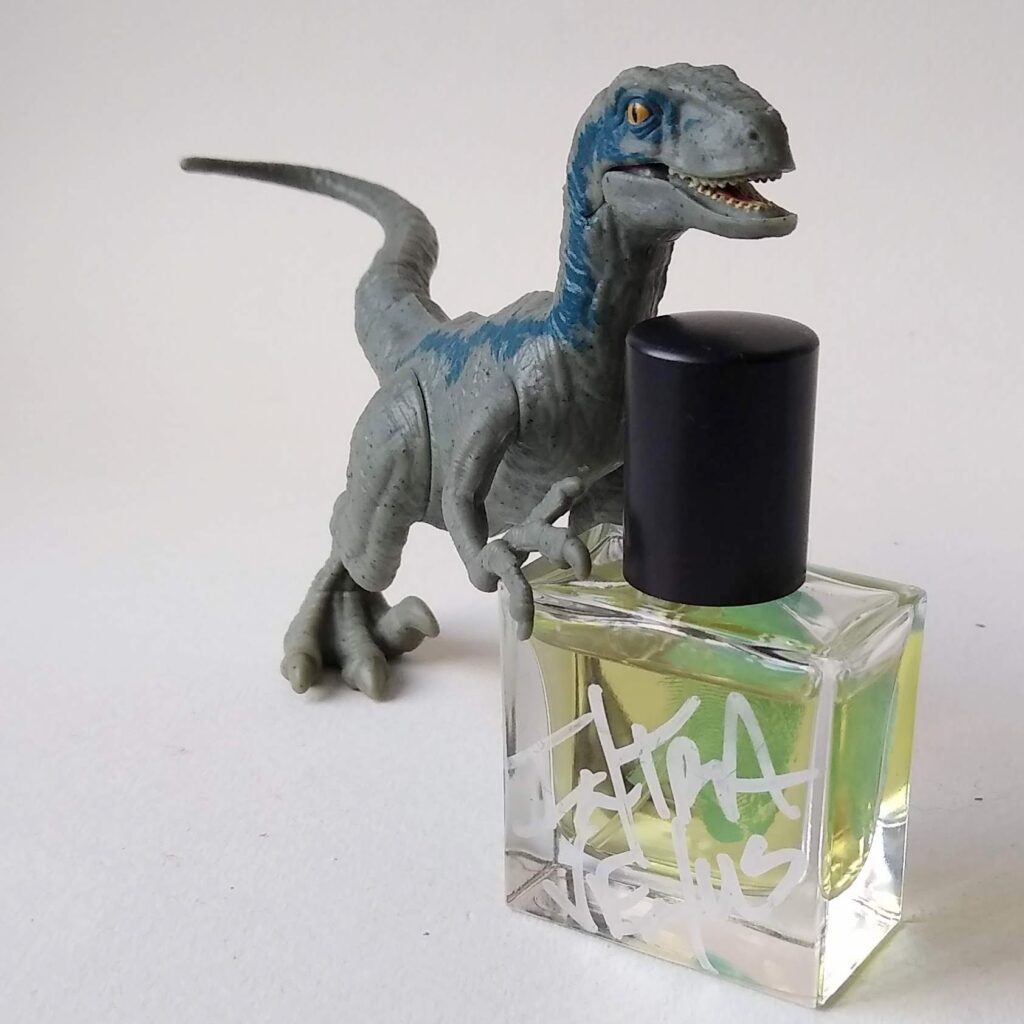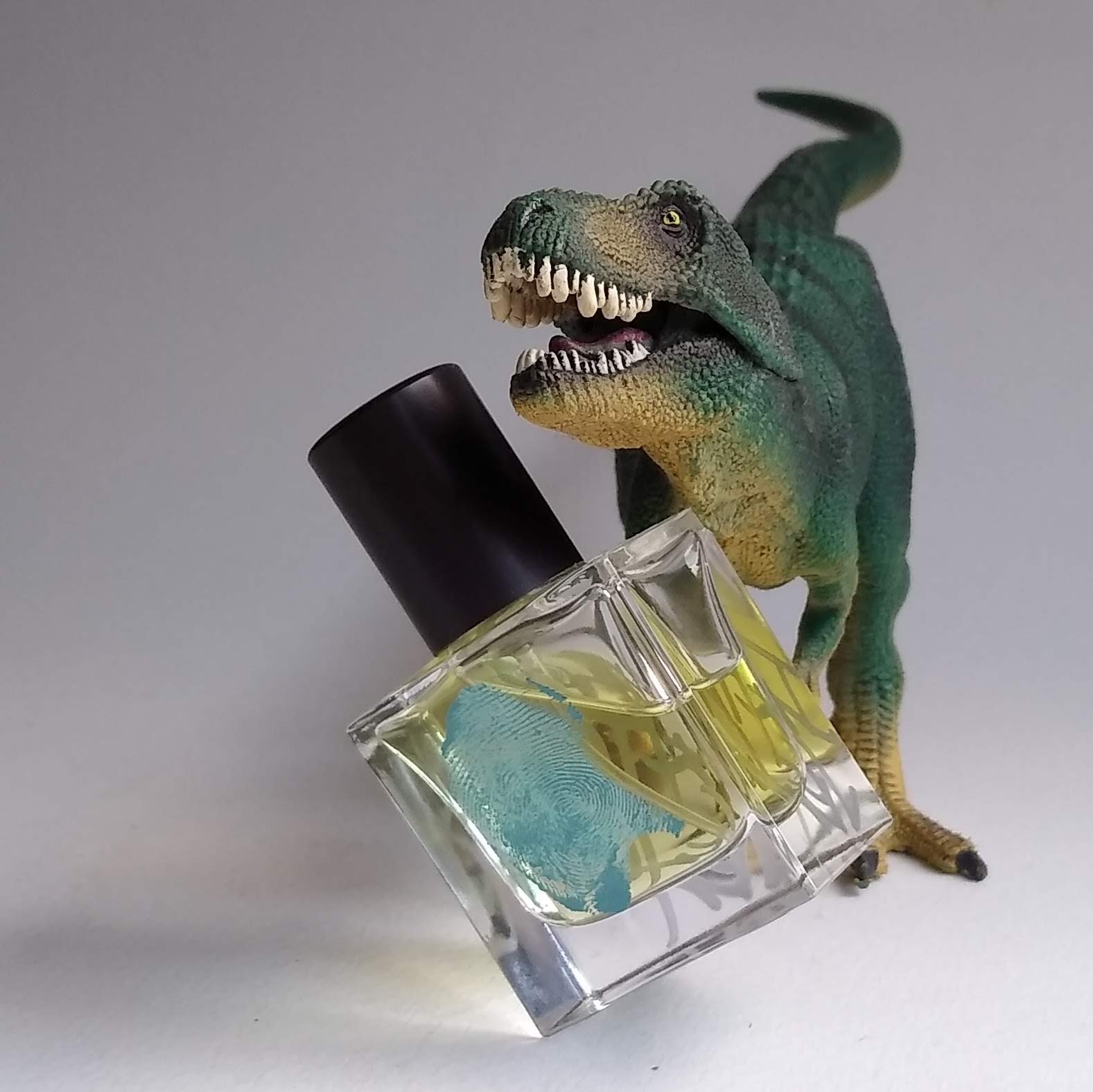
Intra Venus has the tight shine of scar tissue, the intense flashes of light of a broken mirror or scalpel dropped into a bowl of antiseptic. It’s the white-out vision of pain. The sharpness of a sound at the edge of hearing.
Intra Venus is a shimmering narcotic hyacinth with the wet green of broken stems, earth still clinging . It’s a floral cocoon. Nothing bad can happen here.
I wear Intra Venus for the beauty, not the pain.
///
This is a post about pain. Pain and perfume.
The last post had no baggage. This is nothing but baggage.
///
When I first met Chronotope‘s Intra Venus I cried. It hit a sense memory so hard I was overwhelmed: the smell of a blue cotton cellular blanket, boil washed and steam-pressed to crunchiness in an industrial laundry, taut over cut skin and drilled bones. Stripes of sunlight slice across the bed and into my eyes through the ward window. Too bright to read or see. I was five. I was three. I was seven. (I was in this ward at Great Ormond Street over and over.) I could see and smell the starched linen of pinned-on white aprons leaning over me, the pleats of the little hats, and balloon cuffs. The vivid bruises of needle punctures.
This was before I’d knowingly seen the iconic picture of Hannah Wilke, hooded with a hospital blanket, serene. The image lives inside the perfume.
In those early years I had dreams filled with green fog during every surgery. Last month, in the small room before the operating theatre, the room where people first start to loom over you and clench your arm and smack your skin until veins rise, the smells have changed. I tried to focus on this during the adrenaline surges of fear, quizzing the anaesthetist slightly incoherently. Modern anaesthetics smell entirely different. There’s still a taste and temperature shock when something first flows through the cannula into your body –not as intense as the copper stink of MRI contrast dye, white and thickly opaque instead– but the dark green powder paint smell has gone.
Even the tape and dressings smell different.
I’ve written before about the scent memories of hospitals and surgeries. My whole life has been punctuated this way and they are intense sensory experiences. More than that, they are one of the markers I use to map time. Surgeries and house moves are the axes on which everything else gets positioned.
///
I’m not sure I’ve ever written directly about pain. I was trained at an early age to make light of it, to be a brave little girl, not like that girl over there, crying, making such a fuss, and she’s a big girl*. Don’t cry. Hide the pain for our comfort.
Fuck that. I learned a few years ago the cost of hiding pain.
///
Pain, like perfume, is only knowable from the inside. It’s intensely personal, embodied, inseparable from our own sense of being. We talk about the paucity of direct language for scent. We steal metaphors from music and food and colour, trying to align one sense with another, and position an unknown scent against a familiar one. But with perfume you can sniff my wrist, or buy a bottle of this fragrance and have a fixed reference point to build your direct experience and we can talk back and forth, calibrating (even if your skin and cultural mapping skews it away from mine.)
Pain doesn’t work that way. How do I tell you what I feel in a way you can understand? How do I tell you how big those sensations are, and how they change over time?
It took so many years to even develop the language to communicate the shapes of pain between patients and doctors** beyond the inadequate “bearable, moderate, severe” scale, and cartoon faces from smiling to frowning to anguished scrunches.
I can tell you my loose prosthesis feels like splitting wood with a metal wedge deep inside my thigh, that it feels hot and too heavy, that this fracture feels like being a boiled egg bashed once on the side, leaving the cracked shell clinging to the membrane. An x-ray reveals the way the metal has shifted and started to move inside that crumbling foundation of femur, or the broken bone when I landed on a fissured paving slab. And you can look and see proof that there is a source for the pain. And you can judge it needs medical attention.
My fumbling expression of my pain becomes irrelevant when the cause is visible. There is no more need to doubt my words, speculate on how over sensitive I might be, how much of a wuss. Am I? I still wonder.***
Three days before my hysterectomy I almost called the hospital to cancel because I was making a fuss about nothing. Again. I felt like I had transgressed, and been pushy and demanded surgery and surely there was no need. It was the morphine talking, and somehow convincing me that having to take morphine was a sign of weakness not of bodily catastrophe. And it was fear. The pain was still infused with doubt, because no one else could see it and validate it.
We are so often seen as unreliable narrators.
There is an aggressive reframing some medics do: the pain is pretty bad, doctor. You’re in some discomfort? No, it’s pain. Does moving change the level of discomfort? The pain rips through me if I unfold. (A direct exchange in A&E a couple of years ago). I was sent home with a sneer: “it’s not surgical, there’s nothing I can do”. I’d gone in with suspected ovarian torsion, maybe a burst cyst, but been dismissed because I clearly wasn’t in enough pain.
I was, but I was doing what I always do: chat brightly, vapidly, fast and too much. I try to leave no space to experience my own pain, drown it with words, show again how, ha ha, look! I am not making a fuss. When what I wanted to do was howl “make it stop, make it stop, make it stop”.
(My sister tells me I need to learn to ugly cry about pain. To perform pain.)
After a few months of this I couldn’t cope. I could barely move. I curled up and took a lot of drugs and waited for appointments. Finally, an ultrasound showed a sign that suggested pre-cancer (I knew it wasn’t cancer, but it got me an urgent referral to a specialist.) Back and forth, and minor procedures with biopsies and hysteroscopies, and, finally, yes, well, we could do something about those fibroids, there are rather a lot. We can take them out, that could make you more comfortable.
There were rather a lot. And, surprise, stage 4 endometriosis, wall to wall. It hadn’t even occurred to anyone. (Too old, post menopause). And there are no reliable diagnostics that work from the outside. That ovarian torsion? Uh, yes, The adhesions had stuck it down in that twist.
I’m not sure how you coped, said the surgeon who held forth about the extent of what he’d found.
I didn’t, I said. But nobody listened.
///
If you can’t see my pain, is it real?
///
It’s gone now. They took it out. They saw it, and finally believed it.
///
The loose metalwork? I had surgery**** within ten weeks of the authoritative clarity of the x-ray. The crumbled bone was cut away. The metal stretches now from socket almost to knee, and I’m learning to walk again. Without pain, except the grumbling of rearranged muscles and healing flesh. And a little strange nausea triggered by pressure on the new end of the shortened bone. That’s just odd. It will go away, fade like the last ghosts of dry down.
///
What has any of this to do with scent? It’s about language, and living in a body, and how one unnameable thing can express another. Perfume, like pain, alters us, writes itself into our memories, and leaves us fumbling to express what it means.
///
There were no flowers at all in my ward. Do people not bring flowers to the hospital any more?
I brought my own remembered hyacinths.
I didn’t wear Intra Venus when I was in hospital last month, but I could conjure the smells in my memory, build a phantom around me, layering the hyacinth on top of the narcotics and antiseptics and dressings and metallic blood. I sat with this perfume in the dark noisy nights, scaffolded by the ghost scent, thinking about skin and bodies and art and pain, about ferocity, about the sharp shine and the rawness, about the power of owning your body, owning pain. About one more long scar scything from hip to knee, layers upon layers of scar tissue holding me together. About the next steps.
I’m wearing Intra Venus again today while I type this and listening to the Clash’s Lose this skin on repeat. I’m at home, drinking good coffee. There’s a large grey cat snoring next to me. All the staples are gone from my wound. My crutches are propped up against the bed.
I am in no pain at all. And Intra Venus is making me cry again.
Not ugly cry.
A good cry.
A disclaimer: Carter is a friend and we’ve talked so much about perfume and art and politics over the years). I can’t entirely disconnect my responses to his perfumes from those conversations, but I would never praise based on that. It would be pretty insulting. I bought my own bottles of most of his scents, including this one (though there have been a couple of extras in the post).
* To my shame this old deep-seated refrain kicked in when the woman in the next bed kicked off with dramatic signs and moans. While I hate myself for judging her expression of her pain, she was also bloody annoying.
** Thank you Ronald Melzack, Patrick Wall, and W.S. Torgerson for the revolutionary work on the vocabulary of pain.
*** and then I remember that three years ago I spent over a fortnight walking around on a fractured bone, trying to convince myself it was just bad deep bruising. Nothing to worry about . don’t make a fuss.
**** a revision to my proximal femoral replacement. It’s pretty impressive that this could be revised, given how short my femurs are, and how knackered my bones. Thank you, Sam and your team at the RIE.